Vicktoria Blake
on Putting People First

For Vicktoria Blake, sustainability has always been about the relationship between people and the natural world. Her guiding whakataukī, ka ora te taiao, ka ora te tangata - “if the natural environment is well, so too are the people” - sits at the heart of her work. So does another motto she tries to live by: “Be a good ancestor.”
With more than 20 years in the sustainability and climate change field, Vicktoria has seen the conversation evolve. Today, as her work focuses on climate risk and resilience at Te Whatu Ora | Health New Zealand, she is thinking beyond the physical assets of the health system and towards a much bigger question: how will climate change affect the ability of the health and social sector to deliver services into the future?
“The health system has a number of challenges, however we have just celebrated the decommissioning of our last coal boiler on the Health NZ estate so that is a massive win.” But for Vicktoria, the challenge now is broadening the lens. “The biggest challenge is broadening the lens that climate risk is only an infrastructure problem.” Climate change is “the greatest threat to human health and wellbeing”, and she wants climate planning to reflect that reality.
Her approach to change starts with understanding systems. “To change the system, you have to understand the system.” For Vicktoria, being an effective advocate means understanding “the levers and language” that can help turn an issue into a priority for a resilient organisation or society.
It also means building relationships. Her advice for engaging stakeholders is simple: “Talk, talk and more talk. Go out and talk to people.” Show up, get into the room and build connections over time. But conversation is only half of it. “You need to learn to listen more than you talk.” Understanding what matters to other people, she says, can help you frame your message in a way that connects with what they care about.
And humility matters too. “You do not need to be the smartest person in the room. Be humble. Say you don’t know, if you don’t know.” For someone working on a challenge as complex as climate change, knowing what you don't know can be just as valuable as having the answers.
Her thinking is also shaped by an Indigenous perspective that she believes has lessons for organisations everywhere: intergenerational thinking. While organisations in Aotearoa often plan “3-5 years”, Vicktoria argues that we need to think much further ahead - “thinking out 100 years instead of 3-5” - and consider what that means for the resilience of future generations and our mokopuna.
If Aotearoa has a sustainability superpower, she believes it is precisely what is sometimes seen as a weakness: being small. Rather than limiting what we can do, it gives us the opportunity to “be nimble, try things that larger countries haven’t (or cant) try, and tap into our #8 wire mentality”.
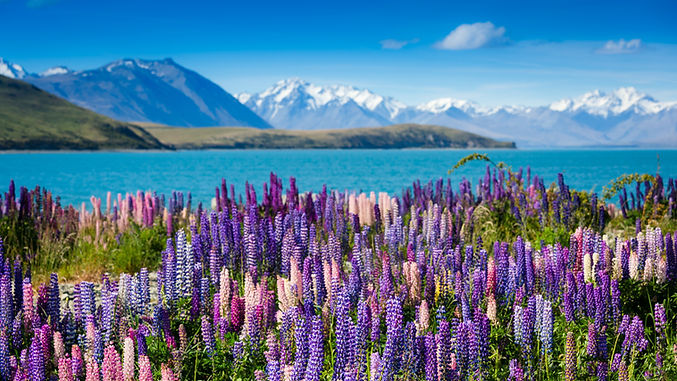
And if sustainability were a flower blooming in her life? A field of wildflowers: “all blooming different shapes and colours, feeding the pollinators to keep the world well.”
That diversity, connection and sense of collective wellbeing feels fitting for a philosophy grounded in the belief that environmental health and human health are inseparable. If her work could plant one seed of change, it would be simple: “Put people and not infrastructure at the centre of climate planning and solutions. Infrastructure serves the needs of people, so we need to put the people first.”
And her actionable advice for the rest of us is even simpler: “Focus on the positive….and go and plant a tree (preferably a native)!” Read Vicktoria’s Blooming Sustainability to learn more about how to put people first.brings people in rather than putting them on the defensive."
BLOOMING Sustainability Questionnaire
Name: Vicktoria Blake
Company & Title: Te Whatu Ora | Health New Zealand
Website & LinkedIn Profile: https://www.healthnz.govt.nz/about-us/what-we-do/our-role-and-priorities/sustainability-resilience https://www.linkedin.com/in/vicktoriablake/
* Guiding Values | Kaupapa
If sustainability were a flower blooming in your life, what would it look like? What nurtures it?
To me, sustainability is like a field of wildflowers, all blooming different shapes and colours, feeding the pollinators to keep the world well.
A quote, personal motto or whakataukī that reflects your vision:
I often use the whakatauki – ka ora te taiao, ka or te tangata, if the natural environment is well, so too are the people….another motto I like to live by is “Be a good ancestor”. We borrow the future from our children, and it is our responsibility to do the best we can to improve the damage to our natural world inflicted by ours and previous generations.
If you could mentor a rising change-maker in Aotearoa, what advice would you share?
I have had the privilege of mentoring many young humans into climate change and sustainability mahi over the years. Some of the advice I often share is “to change the system, you have to understand the system”. It is all well and good to be an activist, but to be a true advocate that may be able to enable real change, you have to understand the systems in which you are working so you can understand the levers and language you might be able to utilise to get your message across in a way that is understood and considered a priority for a resilient (and sustainable) organisation or society at large.
My second note on this is to put your own oxygen mask on first. What I mean by this is, working in sustainability and climate change can be truly rewarding, but it can also be incredibly frustrating and at times depressing. You need to make sure that you are taking care of your own wellbeing before taking on the responsibility of the wellbeing of the entire planet and everyone living on it. This is something that is way easier said than done, and is still a work in progress for me, even with my 20+ years in the field and knowing a bunch about mental health and wellness.
* Leading Change | Arataki
A key moment in your journey that shaped your path:
This question is a tough one as it has all kind of just come to this. I have always had an interest in the natural environment and biodiversity. I also have a solid business background so being able to bring strategic business management in line with environmental management just seemed to make sense. Plus, I got a merit in intermediate on a project about bush pests in Aotearoa (think possums and stoats) and one in high school on a project on whales….so maybe it has always just kind of been there.
What’s the main challenge you face in driving sustainability within your sector?
The health system has a number of challenges, however we have just celebrated the decommissioning of our last coal boiler on the Health NZ estate so that is a massive win. Currently I focus on climate risk and resilience and I would argue in that space the biggest challenge is broadening the lens that climate risk is only an infrastructure problem. It is widely known that climate change is the greatest threat to human health and wellbeing and I am also concerned that we are not considering enough as a whole the impacts of how climate change will affect the ability of the health and social sector to deliver services into the future. This is the head scratcher we are working on in Te Whatu Ora currently.
An Indigenous perspective you admire and want people to be mindful of:
I think the indigenous perspective that is true for many cultures around the world, including tangata whenua, is intergenerational thinking. In organisations in Aotearoa we like to plan for 3 – 5 years, and even infrastructure planning may not be planning for full use life (as opposed to intended use life). We need to be thinking well into the future when we are making our plans, thinking out 100 years instead of 3 – 5, and really consider what kinds of indicators and plausible scenarios we should be considering when planning, to ensure we are setting ourselves (and our mokopuna) up for a resilient future.
Your best approach for engaging stakeholders in meaningful dialogue about ESG:
Talk, talk and more talk. Go out and talk to people. Go to the networking event, take the opportunity to speak at the conference, get yourself into a room where you will be heard. And while you are working on those connections, just show up. If you know an Exec member likes to have coffee at 10am at the local coffee house, happen to get your coffee there too and start a dialogue. Building relationships takes time, but it is the most critical tool for enabling action.
Further to this, you need to learn to listen more than you talk (another work on for me to be fair, and those that know me might tend to agree). If you listen to understand, it can really help you to frame the content that you want your listener to understand. What is important to them and how can you link this to what is important to you?
And finally, you do not need to be the smartest person in the room. Be humble. Say you don’t know, if you don’t know. And if you don’t know something, and it seems important, go and find out more about it. You would be surprised how blessed people feel when they know that you care enough about what is important to them that you went and did more research.
What do you think is Aotearoa’s superpower in creating a sustainable future?
Being a small country is often used as an argument for why we cant (or shouldn’t) do something, think economies of scale and what not. But I would argue that being a small country gives us the opportunity to be nimble, try things that larger countries haven’t (or cant) try, and tap into our #8 wire mentality and find solutions with what we have available, just like we always have.
* Surfing the Green Wave | Kakariki
Books, podcasts, courses or other resources that profoundly shaped your approach to sustainability:
Outrage + Optimism is a great podcast. There are so many books, but I really enjoyed Wayfinding Leadership as a resource to help take a kaupapa Māori approach to leadership in Aotearoa. And for me I love to read and watch dystopian fiction. There are a couple or reasons, one is that it’s nice to think about a dismantled world that can’t be blamed on climate change sometimes (lol), but also it gets you thinking out of the box on what some of the solutions (or problems for that matter) could be for this wicked situation we have found ourselves in globally.
Events in Aotearoa or globally that you think are must-attend:
The Climate Change and Business Conference is always a good one. I also recently attended the Aotearoa Society of Adaptation Professionals inaugural conference which was fantastic for those of us that focus on climate resilience. One day I hope to get to COP and from a health perspective there is the Aotearoa Climate Health and Sustainable Healthcare Conference and the Climate and Health Alliance’s Climate Summit in Australia.
A sustainable initiative or project in Aotearoa that deserves more attention:
I don’t know that it isn’t getting enough attention, but I really support the mahi of Rewiring Aotearoa. Moving Aotearoa to renewable energy solutions has so many benefits, including those for human health and wellbeing.
If your work could plant one seed of change for the future, what would it be?
Put people and not infrastructure at the centre of climate planning and solutions. Infrastructure serves the needs of people, so we need to put the people first.
The leader(s) you endorse for a future edition of Blooming Sustainability:
Mike Casey – Rewiring Aotearoa
Lou Aitken – Deloitte
* One actionable takeaway for our readers to make a change today for a brighter tomorrow:
Focus on the positive….and go and plant a tree (preferably a native)!


