Alec Tang
on bridging understanding in sustainability

For Alec Tang, sustainability is a deeply reflective journey—sometimes in full bloom, sometimes in the quiet, regenerative “in-between” phases. “Right now, my flower is recovering energy, ready to flower again,” he says. What nourishes it, he explains, is connection—seeing others facing similar challenges, sharing ideas, and finding reassurance that change is a collective effort.
Alec brings this ethos to his role as Partner and co-Lead of Climate, Nature, Sustainability and ESG at KPMG New Zealand, where he helps organisations navigate complex sustainability challenges across climate, nature, and ESG. Drawing on his grounding in environmental science and Indigenous perspectives, he designs strategies that are both rigorous and human-centred. “Understanding the systems that shaped our current challenges is critical,” he says. “We can only solve them by challenging norms and thinking differently.”
A key moment in Alec’s journey came during his undergraduate studies in the UK, when a course on Aboriginal Australian perspectives on water opened his eyes to the depth and value of Indigenous knowledge. This path eventually led him to Aotearoa, where he completed a Masters in Environmental Science with a focus on sustainable cultural heritage tourism co-facilitated by Ngai Tai ki Tamaki. Since then, Te Ao Māori perspectives have been central to his approach, influencing projects from Auckland’s Climate Plan to integrated climate, nature, and Māori sector scenarios for seafood.
Alec sees his role as bridging understanding - translating complex sustainability concepts into language and actions that resonate, while recognising that sometimes the best messenger isn’t himself. His advice to rising changemakers? “Look after yourself, build resilience, and make time for the things that fill your cup.”
For Alec, Aotearoa’s superpower lies in connectivity - the points of collaboration that, like a spider’s web, make systems stronger and more resilient. One seed of change he hopes to plant: “Everyone can make a difference. The ripples are often far-reaching, more powerful than you realise.”
BLOOMING Sustainability Questionnaire
Name: Alec Tang
Company & Title: Partner and co-Lead Climate, Nature, Sustainability and ESG, KPMG New Zealand
Website & LinkedIn Profile: : https://www.linkedin.com/in/alec-tang/
* Guiding Values | Kaupapa
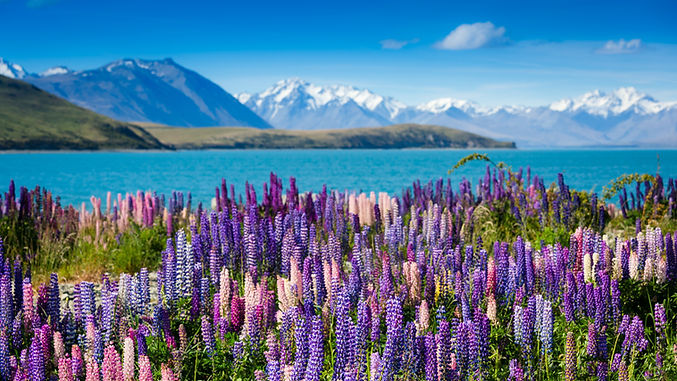
If sustainability were a flower blooming in your life, what would it look like? What nurtures it?
Right now, in all honestly, I feel like my flower is currently in the ‘inbetween’ cycle, post-bloom, recovering energy, ready to flower again. It’s been a tough few months, and so time to recharge and reassess. What nurtures it, is being around others, seeing that I’m not the only one who’s tired, bouncing ideas off others and recognising there are many of us working for change.
A quote, personal motto or whakataukī that reflects your vision:
Ka mua, ka muri – looking back to go forward is one of my personal favourite whakatauki – a long time ago, I did a ‘strengthsfinder’ test and one of my strengths that really resonated was ‘context’, whereby I have a core belief that we can find solutions in looking back at how we got to our current place – many of our challenges stem from the systems we have created in the past, that shape the behaviours of today. In parallel, my favourite quote is Einsteins – ‘We cannot solve our problems with the same thinking we used when we created them” as this speaks to the fundamental system shifts that we need to make, and how we need to challenge our norms and mental models in order to achieve this.
If you could mentor a rising change-maker in Aotearoa, what advice would you share?
Make sure you look after yourself, find ways to continuously feed your stores and stocks of resilience – whatever that looks like; being active, connecting with people, connecting with nature, giving back to your community. It’s important to try and figure out what works for you and create time and space to do those ‘cup-filling’ activities.
* Leading Change | Arataki
A key moment in your journey that shaped your path:
A long time ago(!) when I was doing my undergraduate studies back in the UK, I happened to take a paper that involved a discussion of Aboriginal Australian perspectives on water. Having grown up in a very Western-centred world view (despite my HK Chinese heritage), it was quite the revelation to me and took me down a path of learning more about indigenous perspectives and culminated in me travelling to Aotearoa New Zealand and pursing a Masters in Environmental Science, with a thesis focused on sustainable cultural heritage tourism that was co-facilitated by Ngai Tai ki Tamaki.
What’s the main challenge you face in driving sustainability within your sector?
I think there’s probably two parallel challenges – one of language; trying to translate what seems obvious and simple to me, into a language that resonates with others who many not have travelled the same path, or come to the same conclusions. The other is continually reminding myself that the behaviours and perspectives we see are the product of the systems with which people have grown up; the settings, norms and measures of success that have been consciously and subconsciously imprinted into our individual world views, so breaking those down and confronting them will inevitably be met with some resistance.
An area you need more support with:
Right now, it’s an energy thing, connecting with others, re-energising. Re-igniting the possible.
An Indigenous perspective you admire and want people to be mindful of:
Te Ao Māori really has been an important part of my sustainability journey, ever since coming to Aotearoa – I look at all the things I’m really proud of; from my Master’s thesis, to Te Taruke-a-Tawhiri, Auckland’s Climate Plan, and recently the pioneering integrated climate, nature and Ao Māori sector scenarios for seafood. These perspectives, the matauranga, concepts and tikanga really need to be at the heart of our response.
Your best approach for engaging stakeholders in meaningful dialogue about ESG:
I think the starting point has to be to try and understand the perspectives of the people you’re trying to engage with, to the earlier questions around quotes that reflect my vision, understanding where people have come from, the mental models that shape their view of the world, their actions, behaviours and thought processes is key to finding messages (and messengers – recognising that sometimes/many times, I might not be the best person to communicate a message is really important) that best resonate.
What do you think is Aotearoa’s superpower in creating a sustainable future?
I genuinely think our closeness and connectivity is a key superpower – particularly as the only way we will resolve our current challenge is by looking across historic silos, collaborating more, and breaking current systems by creating new ones. I also think connectivity is critical to resilience, like a spider’s web, the more points of connection there are, the stronger it/we will be.
* Surfing the Green Wave | Kakariki
Books, podcasts, courses or other resources that profoundly shaped your approach to sustainability:
Some books that I’ve enjoyed reading recently are Citizens by Jon Alexander, George Monbiot’s Invisible Doctrine. I’m currently reading Antifragile by Nassim Nicholas Taleb. My all time fave which I think is still super relevant is Kate Raworth’s Doughnut Economics: Seven Ways to Think like a 21st-Century Economist. I would say the world is moving so fast though that I genuinely am not just on LinkedIn posting random stuff, but soaking in all the great work that’s flying around – if you curate a good feed, you get some fantastic insights.
Events in Aotearoa or globally that you think are must-attend:
To be honest, some of the best events I’ve been to have been the surprisingly low key events – the important thing for me are the conversations that you have and the connections you make that create long-lasting opportunities to riff off each other.
A sustainable initiative or project in Aotearoa that deserves more attention:
Right now, I think every sustainability initiative is doing it hard and deserves more attention! But top of mind for me right now is the upcoming local government elections – the GLOW Aotearoa initiative was a really innovative programme to get more people to put their hand up for election, and there are a few different groups now developing scorecards to help people decide on who to vote for.
If your work could plant one seed of change for the future, what would it be?
Everyone can make a difference. The impact you have may not be what you think it is and the ripples are often more powerful and far reaching than you think.
The leader(s) you endorse for a future edition of Blooming Sustainability:
Victoria Crockford, David Hall, Alison Howard, Geri Ward, Rod Carr, Kate Beddoe, Abbie Reynolds, Ngarimu Blair, Emily Mabin Sutton, Izzy Fenwick, Prageeth Jayathissa, Amelia Sharman, Kaapua Smith, Katie Beith, I could go on; we are so lucky to have so many amazing sustainability leaders doing a whole raft of different things here in Aotearoa.
* One actionable takeaway for our readers to make a change today for a brighter tomorrow: Make time and space to lift you gaze from your desk and your immediate work, to go and chat with someone new (reach out, do the speculative e-mail; the worst someone can do is say no, but it’s likely given the nature of the sustainability community, particularly here in NZ, that people will make time to chat), or someone you haven’t caught up with for a while, and just chew the fat.


